
Franchising
The Difference Between Company-Owned Expansion and Franchising
Learn the difference between opening company-owned locations and expanding through franchising, and what business owners should consider before choosing the right growth model. When a business succeeds and begins considering growth, an important question emerges: Should the company open new locations itself, or expand through franchising? Both models can support brand growth, but they differ significantly in terms of investment, management, control, and responsibilities.
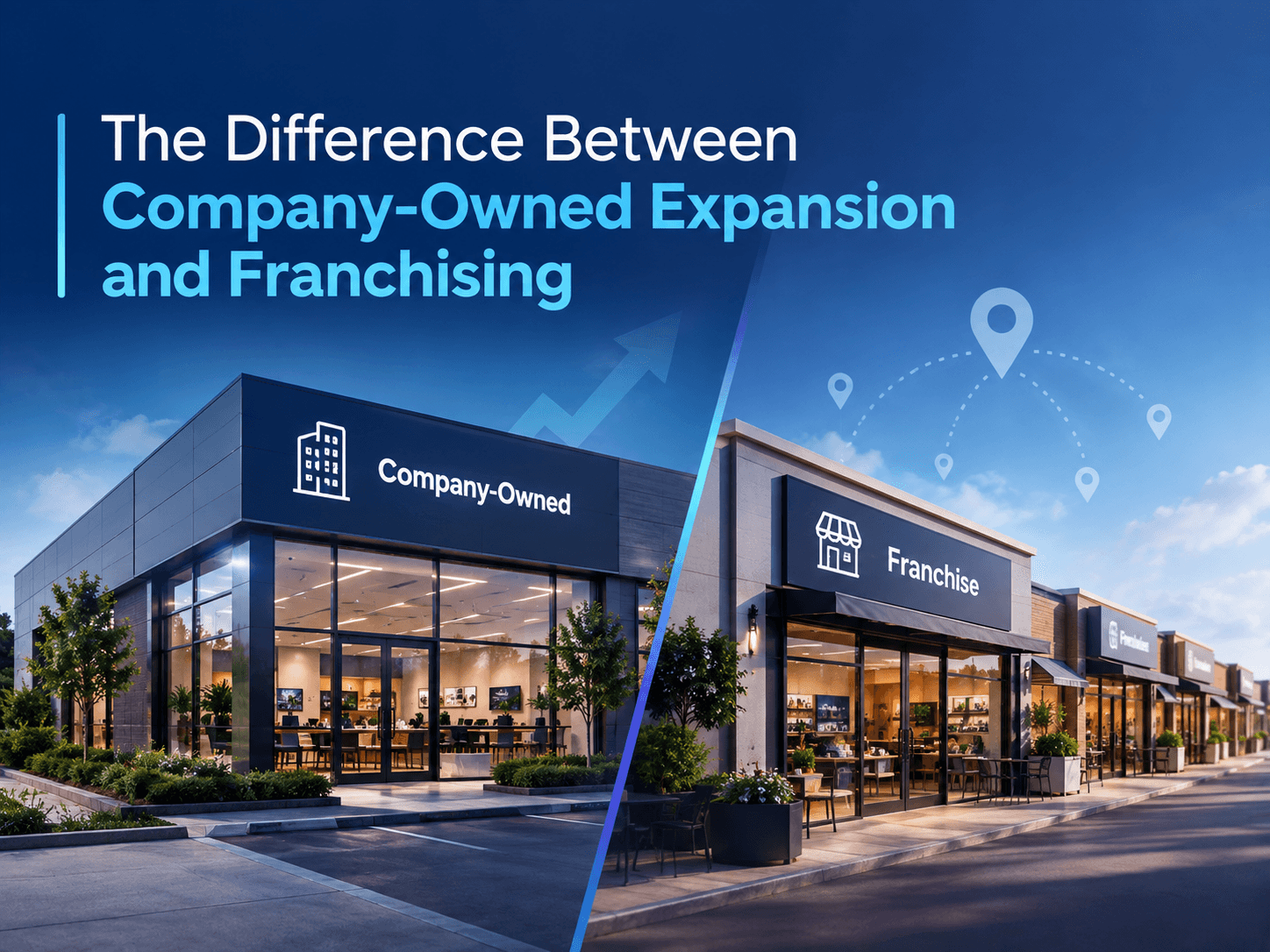
What Does Company-Owned Expansion Mean?
In a company-owned expansion model, the business finances and operates new locations directly.
The company maintains direct control over key operational and management decisions, including site selection, hiring, operations, and performance monitoring.
What Does Franchising Mean?
In a franchising model, the company grants another party, known as the franchisee, the right to operate a business using the brand, business model, and established standards under defined terms and a franchise agreement.
The franchisee takes on a significant portion of the investment and operational responsibilities, while the franchisor provides the brand, operating system, training, support, and oversight according to the franchise model.
What Is the Difference Between the Two Models?
• Investment — With company-owned locations, the company directly bears the investment and operating costs. With franchising, the franchisee invests according to the requirements of the model.
• Control — Company-owned locations give the business greater direct control over operations, while franchising requires clear systems and standards to maintain consistency.
• Management — Company-owned locations are managed directly by the company. In franchising, the franchisee operates the unit while following the brand's operating system.
• Expansion Speed — Franchising can allow a brand to open new locations using franchisee investment, while company-owned growth depends on the company's ability to finance and manage each additional location.
• Risks and Responsibilities — The nature of risks and responsibilities differs between the two models, making it important to assess the company's resources and capabilities before choosing an expansion strategy.
Is Franchising Better Than Opening Company-Owned Locations?
Not necessarily.
The right choice depends on the nature of the business, the brand owner's goals, available resources, management capabilities, and how ready the business model is to expand through independent partners.
In some cases, company-owned locations may be the better option when greater operational control is required. In other cases, franchising can provide an effective way to expand the brand and reach new markets.
What Needs to Be Ready Before Choosing Franchising?
Before moving into franchising, the business model should be clear and repeatable. Operations should be documented, operating standards defined, and training and support systems capable of being delivered to independent franchisees.
Franchising is not simply a way to open more locations. It is an expansion model that requires an operating system that can be transferred and implemented consistently.
How Do You Choose the Right Expansion Model?
Start by evaluating your goals, resources, and operational capabilities.
Ask yourself:
- Can the company finance and manage additional locations?
- Is the business model repeatable?
- How much direct operational control is required?
- Are the processes documented and transferable to a new team or partner?
- Can the company train and support franchisees effectively?
- Which markets does the business want to reach?
The answers can help determine which model is most suitable for the business and its current stage of growth.
Have a question about your franchising journey?
Talk to FRANteq and get direct answers from our team.
Contact FRANteq